
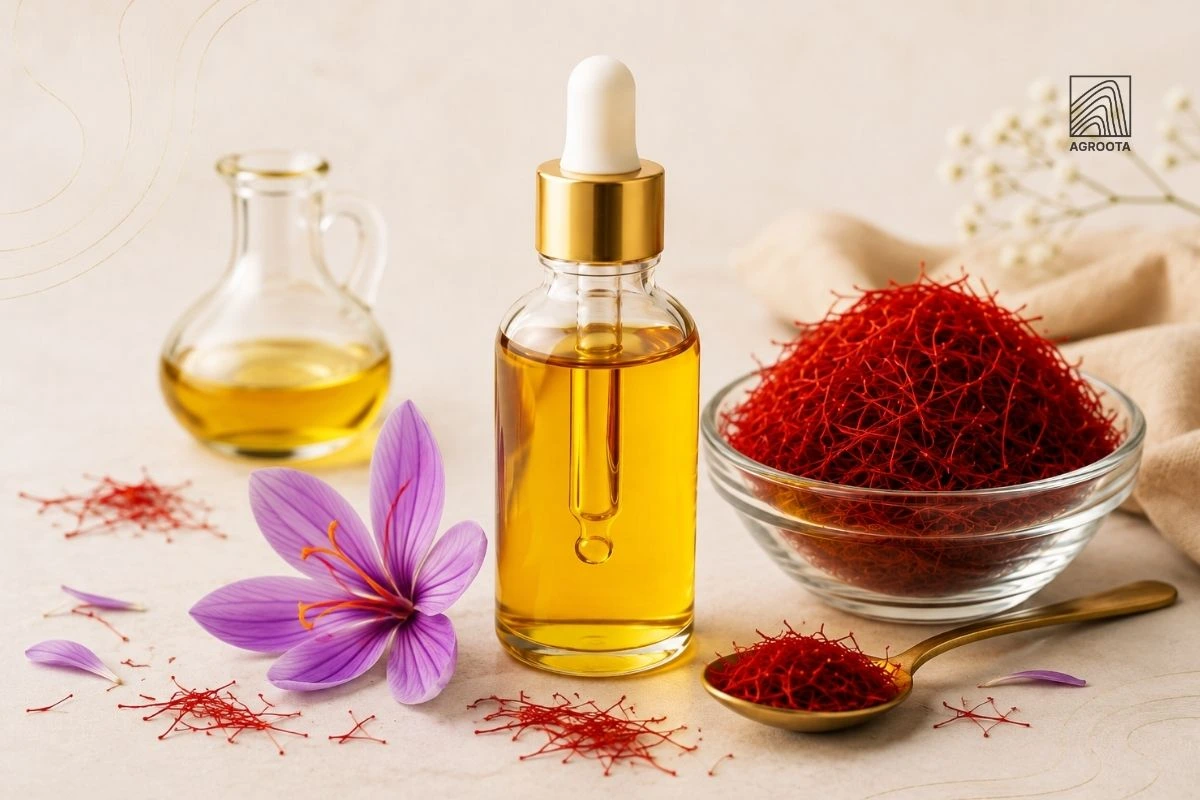
Saffron oil is used in skincare, haircare, aromatherapy, and culinary products for its aroma, color, and botanical properties. However, saffron oil is not one standardized product. The term may refer to saffron essential oil, saffron-infused carrier oil, saffron seed oil, or a saffron extract blended into an oil-based formula. Each type has a different composition, purpose, and safety profile.
This guide explains the main saffron oil benefits, how it is used for skin and hair, when it can be used in food, and what to check before choosing a product.
What is Saffron Oil?
Saffron oil is a general term used for several products made from different parts or extracts of Crocus sativus. It may be produced by infusing saffron threads in a carrier oil, blending saffron extract into an oil-based formulation, collecting concentrated aromatic compounds, or pressing saffron seeds.
These products do not have the same chemical composition. Saffron essential oil is concentrated and mainly valued for its aroma, while saffron-infused oils and extract-based formulations are more commonly used in skincare, haircare, and culinary products. Saffron seed oil is a separate product made from the seeds rather than the red saffron threads.
The amount of crocin, crocetin, picrocrocin, and safranal in a product depends on the raw material, extraction method, and formulation. For this reason, the quality and potential benefits of saffron oil can vary significantly between products.
Saffron essential oil should not be applied directly to the skin. Saffron-infused carrier oils are generally milder, but users should still check the ingredient list, follow the product directions, and patch test before facial or scalp use.
If you are looking for a broader overview, you can also explore the main saffron benefits associated with the spice and its natural compounds.
Saffron Oil Benefits
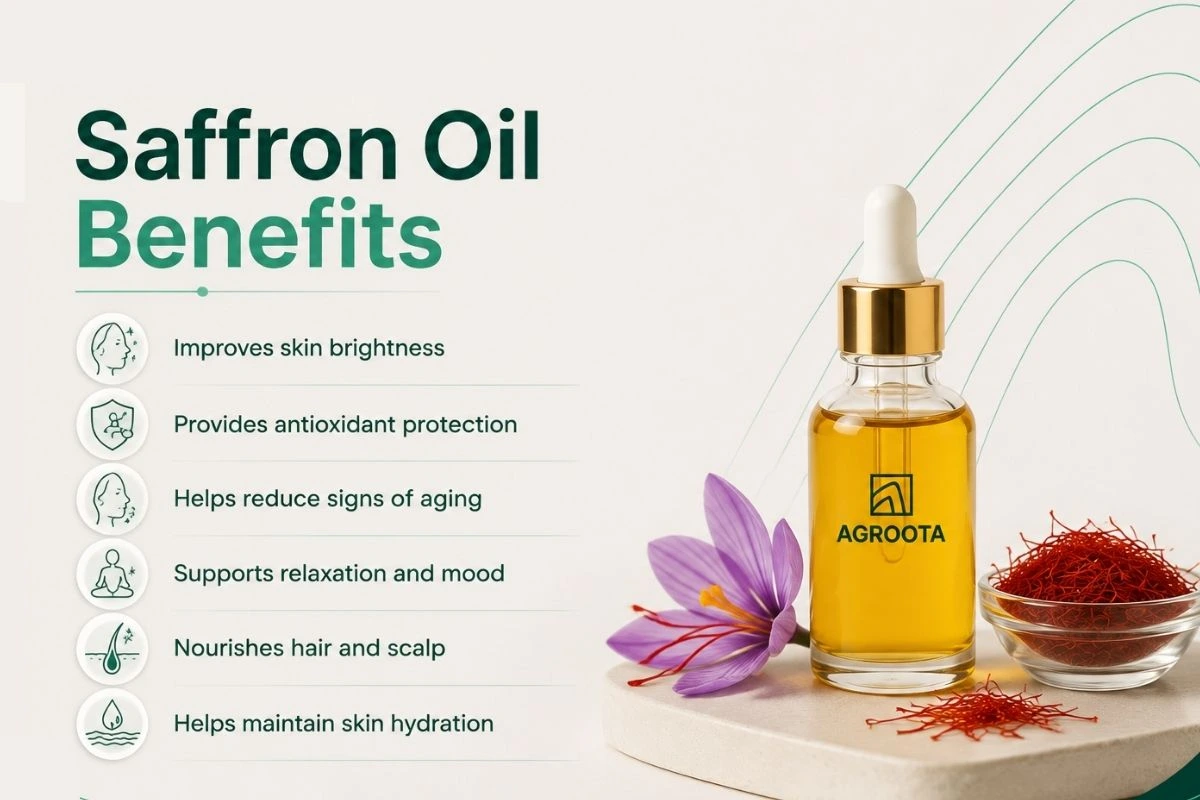
The benefits of saffron oil depend on the product type, saffron concentration, carrier oil, and overall formulation. Common cosmetic and sensory benefits may include:
- May support a brighter-looking complexion in some formulations
- Specific saffron extracts have demonstrated antioxidant potential
- Carrier-oil formulations may support skin softness and moisture
- May improve the appearance and feel of dry hair
- Can add aroma and sensory value to cosmetic or culinary products
Saffron Oil Benefits for Skin
Saffron oil is often used in facial oils, glow serums, and massage blends because saffron contains antioxidant compounds that have been studied for skin-related potential. These compounds may support softer, brighter-looking skin, but saffron oil should be seen as a supportive cosmetic ingredient rather than a proven skin treatment.
It can be useful for dryness, dullness, and a tired-looking complexion, especially when blended with a suitable carrier oil such as jojoba or almond oil.
Does saffron remove dark spots?
Saffron oil should not be treated as a cure for dark spots, acne, or skin aging. Its role is supportive, not medical. Some research discusses saffron’s antioxidant, repairing, and depigmenting potential, but this does not mean that saffron oil is a proven treatment for pigmentation.
For facial use, apply 1–2 drops of diluted saffron oil after moisturizer and do a patch test first.
How to use saffron oil on skin
For a saffron-infused carrier oil, apply 1–2 drops to slightly damp skin or over moisturizer. Use it at night first, especially if your skin is sensitive.
For saffron essential oil, do not apply it directly. It should be diluted into a carrier oil and patch-tested first. General essential oil safety guidance warns against undiluted topical use because essential oils may cause skin irritation, sensitization or allergic contact dermatitis.
Avoid applying saffron oil close to the eyes, broken skin, active eczema flares or inflamed acne. Natural does not mean low-risk.
Saffron Oil Benefits for Hair
Saffron oil is often used as a premium hair and scalp oil because it may help improve the look of shine, softness, and dryness. Like many traditional uses, its value comes from saffron’s natural compounds and rich botanical profile. However, these benefits are mostly cosmetic, and saffron oil should not be presented as a medical treatment for scalp or hair conditions.
Does saffron increase hair growth?
Saffron may support healthier-looking hair by reducing dryness and improving shine, but there is not enough strong evidence to say that saffron oil increases hair growth. It should not be used as a treatment for hair loss, thinning hair or sudden shedding.
How to use saffron oil for hair
For scalp use, mix saffron-infused oil with a light carrier oil such as jojoba or grapeseed oil. Massage gently for 3–5 minutes, leave it on for 30–60 minutes, then shampoo.
For dry ends, use a tiny amount after washing. Too much oil can make fine hair flat and heavy.
Avoid applying saffron oil to an irritated, itchy, or flaky scalp without understanding the cause. Heavy oil use may worsen some scalp conditions, especially when dandruff or seborrheic dermatitis is involved.

Can You Use Saffron Oil in Food?
Yes, but only if it is food-grade saffron-infused oil made with edible saffron and a food-safe carrier oil. This is different from saffron essential oil, which should not be swallowed casually or used like a cooking oil.
Use saffron-infused culinary oil as a finishing oil for rice, soup, seafood, roasted vegetables or salad dressing. Avoid high heat when possible, because heat can reduce saffron’s delicate aroma and quality. Since saffron is one of the world’s most expensive spices, the global saffron price can also affect the cost and quality of real saffron-infused oils.
Safety, Side Effects, and Who Should Avoid Saffron Oil
Saffron oil safety depends on the product type, dose, route of use and the person using it.
For skin, the main risks are irritation, allergic contact dermatitis, clogged pores, eye irritation, and sensitivity to fragrance. Essential oils may cause irritant or allergic skin reactions, especially when used undiluted.
For oral use, the biggest mistake is confusing food-grade saffron-infused oil with saffron essential oil. Culinary saffron oil can be used sparingly if it is clearly made for food. Saffron essential oil should not be swallowed without qualified professional guidance.
Pregnancy and Breastfeeding
Normal culinary use of saffron is different from taking concentrated saffron supplements or extracts. During pregnancy and breastfeeding, concentrated oral saffron products should not be used without medical guidance.
For topical use, choose a clearly labelled cosmetic product, follow the instructions, and stop using it if irritation develops. Concentrated essential oils should be avoided unless a qualified clinician confirms that the specific product and method of use are appropriate.
Bleeding Risk and Medication Interactions
Evidence about saffron and bleeding risk is limited and mainly relates to concentrated oral supplements and extracts. People taking anticoagulant or antiplatelet medication, those with bleeding disorders or anyone preparing for surgery should speak with a healthcare professional before using concentrated oral saffron products.
This concern does not generally apply in the same way to normal culinary saffron or routine topical use.
Patch Test Method
Apply a small amount of diluted saffron oil to the inner arm or the bend of the elbow. Wait at least 24 hours. Do not use it if you notice burning, itching, redness, swelling, bumps or rash.
Patch testing does not guarantee zero risk, but it may help catch obvious reactions before the product goes on the face or scalp.
How to Choose a Good Saffron Oil
A good saffron oil should clearly state what it is. The label should say whether it is essential oil, infused oil, seed oil, extract, cosmetic oil, or culinary oil.
Look for the botanical name Crocus sativus L. Avoid vague products that say only “saffron oil” without explaining the base oil, extraction method, or intended use. Because saffron is expensive, adulteration is a known problem in saffron products.
For skin care, choose a product that lists the carrier oil, has a full ingredient list, and avoids unnecessary fragrance if you have sensitive skin.
For food, choose food-grade saffron-infused oil only.
For aromatherapy, choose a product from a supplier that provides the botanical name, batch details, and safety guidance.
Sourcing Quality Saffron for Oil Formulations
For cosmetic, food, and wellness brands, the quality of saffron oil begins with the quality of the saffron raw material. Business buyers should review the saffron’s origin, type, grade, color, aroma, batch consistency, and available quality documentation before selecting it for an infused oil or extract-based formulation.
Agroota supports B2B buyers sourcing wholesale saffron for food, cosmetic, and commercial applications. Buyers can compare different saffron types, review available saffron batches and request sourcing information based on their intended use, required volume, packaging and delivery destination.
Extremely low prices, artificial coloring, unclear origin, and missing batch information can indicate a lower-quality or adulterated product.
Common Questions About Saffron Oil Benefits
What are the main saffron oil benefits?
Saffron oil is mainly used for cosmetic, aromatic and culinary purposes. Depending on the formulation, it may support softer and brighter-looking skin, improve hair shine and manageability, add aroma to personal-care products or provide saffron flavor when used as a food-grade infused oil.
Can saffron oil be used directly on the face?
Saffron-infused carrier oil may be used on the face after patch testing, but saffron essential oil should not be applied undiluted. Essential oils can irritate the skin, especially when used directly or near sensitive areas.
Is saffron oil good for hair growth?
Saffron oil may improve shine, softness, and dryness, but there is not enough solid evidence to claim it regrows hair. If the problem is real hair loss, thinning patches, or sudden shedding, a dermatologist is more useful than a cosmetic oil.
Can saffron oil lighten dark spots?
Saffron is studied for antioxidant and skin-related potential, but saffron oil should not be treated as a proven dark-spot treatment. It may support a brighter-looking complexion, but sunscreen and proven pigmentation ingredients remain more important.
Is saffron essential oil safe?
Saffron essential oil should be treated as a concentrated aromatic product. It should be diluted before topical use, kept away from the eyes, used cautiously around sensitive people, and not swallowed without qualified professional guidance. General essential oil safety guidance warns against undiluted skin use and unsupervised ingestion.
Can I cook with saffron oil?
You can cook with saffron-infused culinary oil if it is made with food-grade saffron and food-grade oil. Do not cook with or ingest saffron essential oil. Use culinary saffron oil sparingly as a finishing oil for rice, soup, sauces, or vegetables.
Conclusion
Saffron oil can be a useful beauty and wellness ingredient, but its benefits depend on the type of oil and how it is used. For skin and hair, it is best treated as a supportive cosmetic oil, not a medical treatment. For food, only food-grade saffron-infused oil is appropriate. Choose the right product, dilute when needed, patch test first and avoid exaggerated claims.
Looking to Source Saffron in Bulk?
Compare saffron types, review available batches, and source wholesale saffron for your business based on current supply availability.

Need Current Bulk Saffron Pricing?
View indicative wholesale saffron price ranges by type, or learn how Agroota helps businesses source saffron in bulk.


.svg)

.webp)


