.webp)
The best saffron substitute is turmeric if you need a golden color, safflower if you want something similar to saffron threads, and turmeric with sweet paprika if you are making rice, paella, or another savory dish. These substitutes work well for color, but they do not fully replace saffron’s floral aroma and delicate flavor.
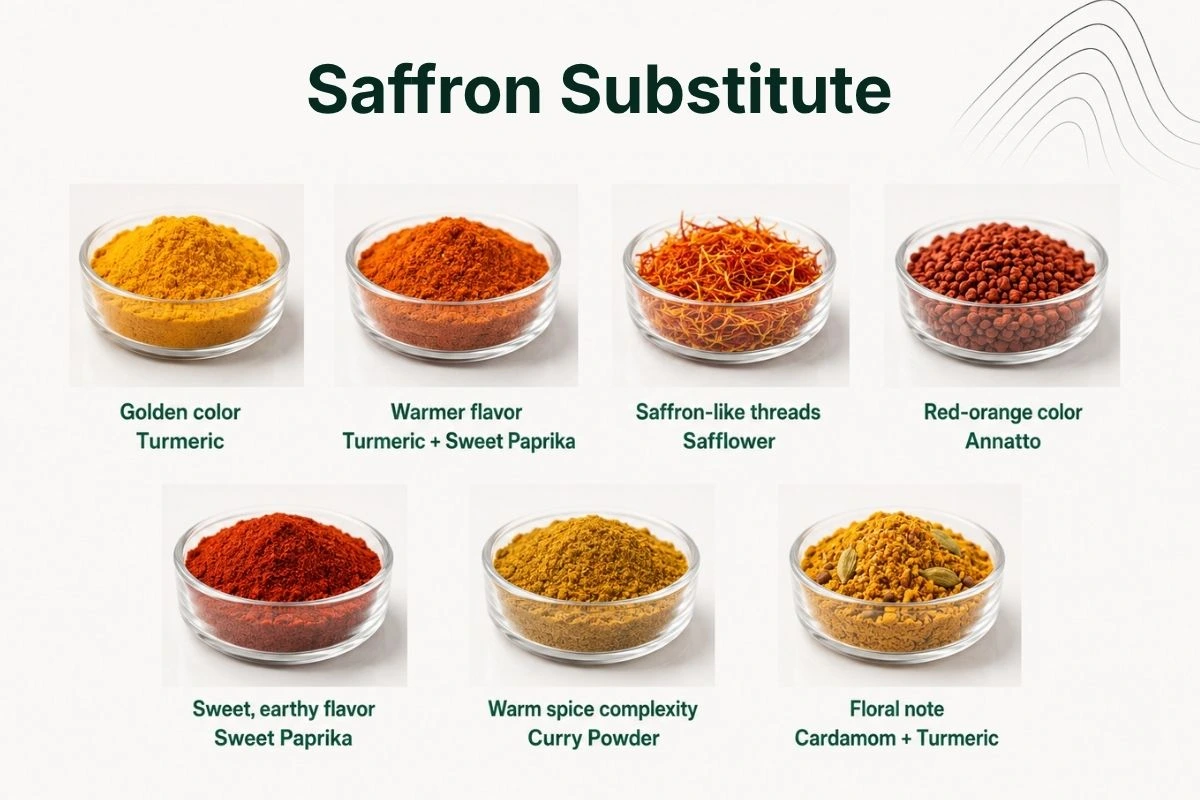
Quick Answer: Best Saffron Substitute by Use
- Need a golden color? Use turmeric.
- Need color with a warmer flavor? Use turmeric with sweet paprika.
- Need something that looks like saffron threads? Use safflower.
- Need a red-orange color? Use annatto.
- Need a sweet, earthy flavor? Use sweet paprika.
- Need warm spice complexity? Use curry powder.
- Need a more floral note? Use cardamom with a small amount of turmeric.
What Spice Can You Use Instead of Saffron?
The most practical answer is turmeric for saffron color and safflower for appearance. But if you want a substitute for saffron threads in cooking, the best all-around option is usually turmeric mixed with sweet paprika.
Turmeric gives the golden color people expect from saffron rice, paella, and soups. Sweet paprika adds a mild sweetness and warmth that makes the flavor less flat. Together, they work better than turmeric alone.
A simple starting ratio:
Use 1/4 teaspoon turmeric + 1/2 teaspoon sweet paprika for one large pinch of saffron threads.
This is not a perfect match, but it is useful for dishes where saffron is mainly used for color and gentle savory depth.
Best Saffron Substitutes and When to Use Each One
No single ingredient can replace every quality of saffron. The best substitute depends on whether you want to match its color, aroma, flavor, or appearance. Here are the most practical options and where each works best.
1. Turmeric: Best for Golden Color
Turmeric is the easiest saffron substitute when color matters more than aroma. It gives rice, soups, stews, and sauces a strong yellow-gold shade, so it works well when saffron is mainly used for appearance.
The key is restraint. Turmeric has an earthy flavor that can become bitter or heavy if you use too much. Start with 1/8 teaspoon, then add more only if the dish still looks too pale. For delicate rice dishes, less is usually better.
2. Turmeric + Sweet Paprika: Best for Paella and Savory Rice
If turmeric alone feels too sharp, mix it with sweet paprika. Turmeric brings the golden color, while paprika adds warmth and a softer savory flavor. This is a better substitute for saffron in paella, Spanish rice, chicken rice, and other dishes where color and depth both matter.
A practical ratio is 1/4 teaspoon turmeric + 1/2 teaspoon sweet paprika for one large pinch of saffron. Use sweet paprika, not hot paprika, unless you want the dish to become spicy.
3. Safflower: Best Visual Substitute for Saffron Threads
Safflower is useful when you want something that looks similar to saffron threads. It can add a light yellow-orange color to broths, rice, and garnishes without changing the flavor too much.
This makes safflower a good choice for appearance, but not for recipes where saffron is the main flavor. Think of it as a visual substitute, not a full flavor substitute.
4. Annatto: Best for Oils, Butter, and Deep Orange Color
Annatto works well when you want a warm yellow-orange or red-orange color, especially in oils, butter, sauces, and Latin-style rice dishes. It is more useful in bold savory recipes than in delicate saffron rice.
For best results, bloom annatto in warm oil or butter before adding it to the dish. This helps release the color evenly and gives the food a richer look.
5. Sweet Paprika: Best for Warmth, Not Saffron Color
Sweet paprika can add mild sweetness and warmth, but it will not give the same golden color as saffron. It works better in stews, marinades, tomato-based dishes, roasted vegetables, and chicken or seafood recipes.
Use paprika when the recipe can handle a soft pepper flavor. If you also need saffron-like color, combine paprika with a small amount of turmeric instead of using it alone.
6. Cardamom + Turmeric: Best for Aromatic Rice
Cardamom can help when the recipe needs a more floral note, especially in biryani, pilaf, and Middle Eastern-style rice. It does not replace saffron directly, but it can add aroma while turmeric handles the color.
Use only a small pinch of ground cardamom with 1/8 teaspoon turmeric. Cardamom is powerful, and too much can make the dish taste sweet or perfume-like.
7. Curry Powder: Best Only When the Dish Already Fits
Curry powder can add color because many blends contain turmeric, but it is not a clean saffron substitute. It brings several spices at once, so it can quickly change the whole direction of the recipe.
Use it only in curries, lentils, chickpea dishes, vegetable stews, or soups where that flavor makes sense. Avoid it in paella, delicate rice, desserts, tea, or light broths.
8. Food Coloring: Only for Color, Not Flavor
Food coloring can copy the yellow color of saffron, but it adds no aroma or taste. It may work for decorative desserts or baking, but it is not a good substitute when the recipe depends on saffron flavor.
Use this only when appearance is the goal. For cooking, turmeric, safflower, annatto, or paprika usually give a more natural result.
For more details on blooming and steeping real saffron, read our guide on How to Use Saffron.
Saffron Substitute for Rice
For plain rice, pilaf, or simple yellow rice, turmeric is the easiest option.
Use a very small amount. Start with 1/8 teaspoon for a pot of rice, then increase if needed. If you want more warmth, add a small pinch of paprika or cardamom, depending on the dish.
For Persian-style, Indian-style, or Middle Eastern-style rice, real saffron is still much better because the aroma matters. Substitutes may create yellow rice, but they will not create saffron rice.
To understand the difference better, read our guide to What Does Saffron Taste Like.
Saffron Substitute for Soups and Broths
For soups and broths, safflower can be useful because it adds a gentle yellow-orange color without making the flavor too strong. Turmeric also works, but it should be used carefully because it can make light broths taste earthy.
Best options:
- Safflower for mild color
- Turmeric for stronger yellow color
- Annatto for deeper orange color
- Paprika for savory warmth
If the soup is delicate, start with safflower or a tiny pinch of turmeric. If the soup is tomato-based or heavily seasoned, paprika or annatto may work better.
Saffron Substitute for Desserts and Tea
This is where substitutes become weak.
Saffron is used in desserts and tea for its aroma as much as its color. Turmeric can make desserts yellow, but the flavor is very different. Cardamom can add floral warmth, but it does not create saffron’s taste.
For desserts and tea, use real saffron if possible. A small amount can still make a noticeable difference when it is bloomed correctly.
For more ways to use real saffron in cooking, drinks, and desserts, explore our complete guide to Saffron Uses.
When You Should Not Use a Saffron Substitute
A substitute is fine when saffron is only a background ingredient. But you should avoid substitutes when saffron is the main flavor.
Use real saffron for:
- Saffron tea
- Saffron desserts
- Persian rice with saffron topping
- Premium paella
- Biryani where aroma matters
- Luxury sauces
- Commercial food products that advertise saffron flavor
If your dish says “saffron” in the name, a substitute will usually feel incomplete. The dish may still taste good, but it will not taste like saffron.
How to Make a Saffron Substitute Taste Better
Use saffron substitutes carefully. Start with a small amount, then adjust after tasting because turmeric, paprika, and cardamom can quickly overpower a dish.
For better balance, combine color and flavor: turmeric for color, paprika for warmth, safflower for appearance, and cardamom for aroma. The best substitute depends on the recipe, not just the spice.
Where to Buy Quality Saffron?
Saffron substitutes are useful when you only need color or a quick backup. But when aroma, flavor, and consistency matter, real saffron is still the better choice.
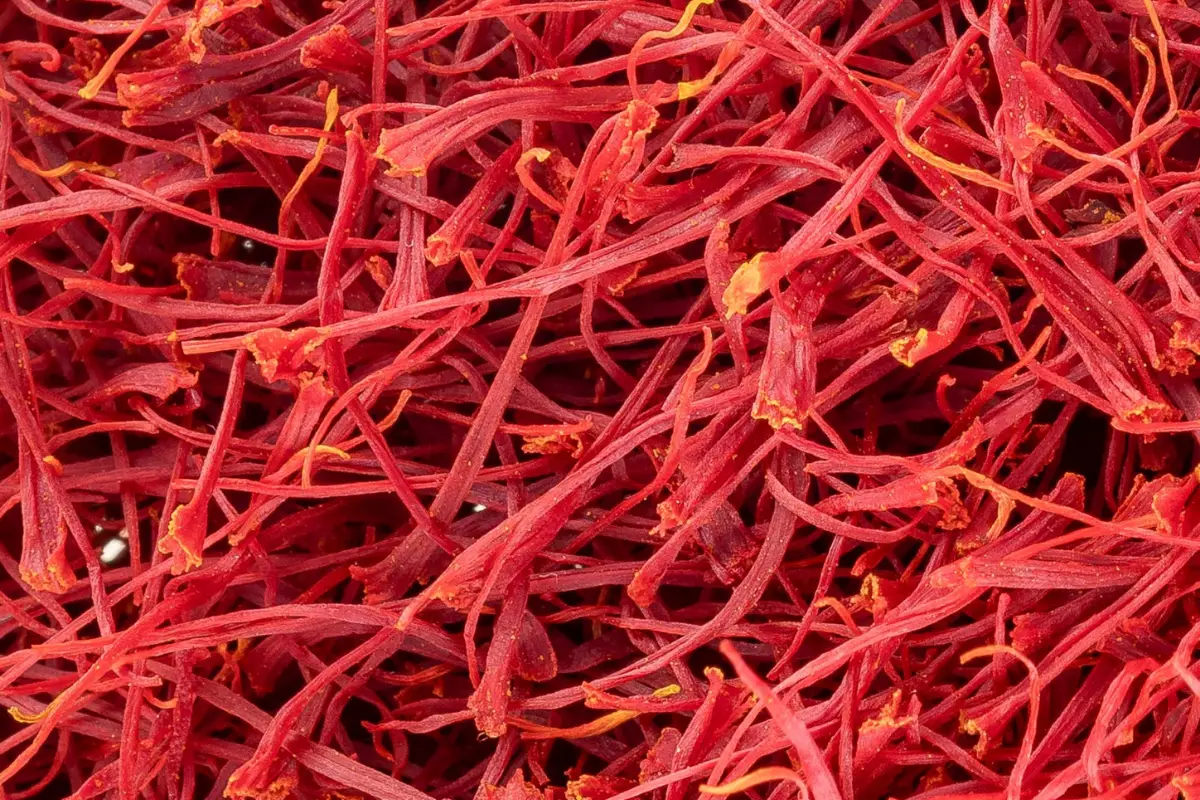
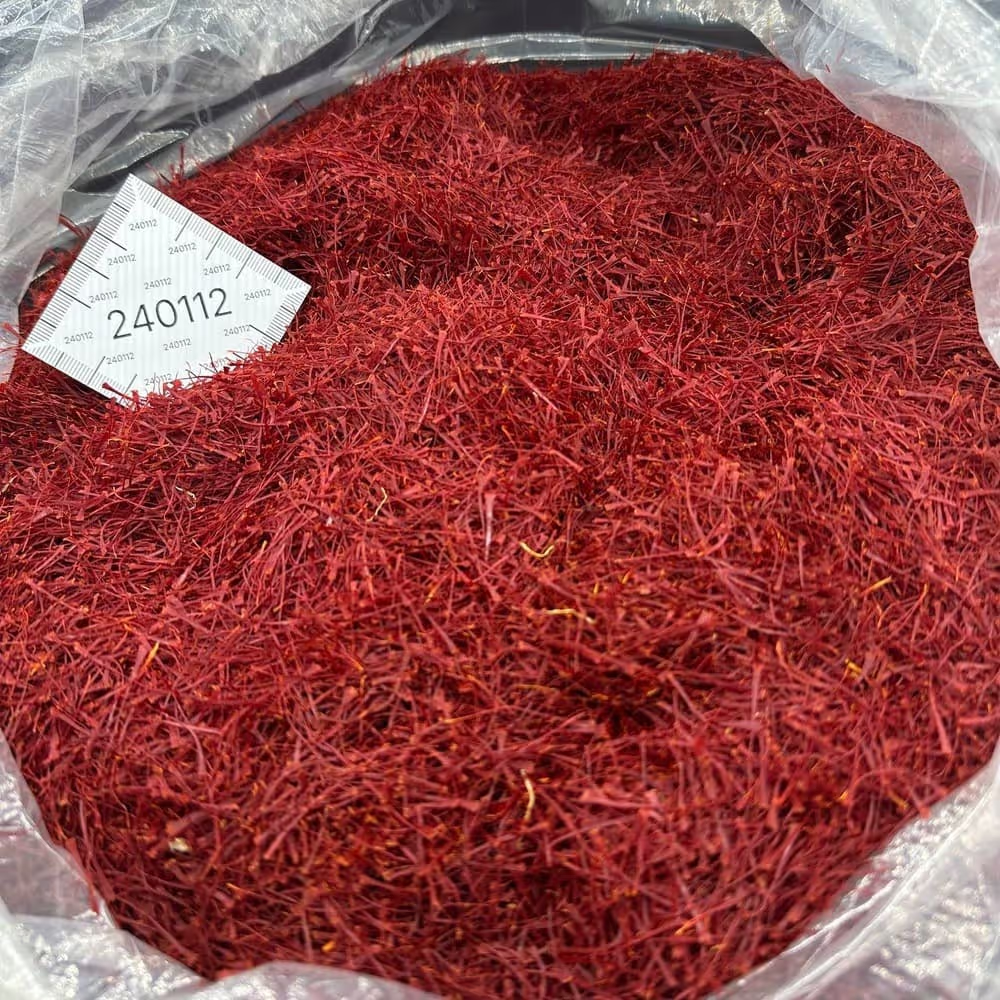
Look for whole saffron threads with a deep red color, clean aroma, and clear origin information. For commercial buyers, quality also depends on grade, batch consistency, packaging, and supply reliability.
Need Real Saffron Instead of a Substitute?
Saffron substitutes can work when a recipe mainly needs color, but they cannot fully reproduce the aroma and flavor of genuine saffron. When quality and consistency matter, choosing the right saffron is usually the better option.
Agroota works with restaurants, food manufacturers, distributors, and other commercial buyers sourcing saffron at scale. You can explore options to buy saffron in bulk, compare different saffron types, or check current Global saffron prices before making a sourcing decision.
Final Thoughts: What Is the Best Saffron Substitute?
Use turmeric for color, safflower for a saffron-thread look, and turmeric with sweet paprika for savory dishes, but use real saffron when aroma and authentic flavor matter.
Frequently Asked Questions About Saffron Substitutes
What is the best substitute for saffron?
The best all-around substitute for saffron is a small amount of turmeric mixed with sweet paprika. Turmeric gives a yellow color, while paprika adds mild sweetness and warmth.
Can I use turmeric instead of saffron?
Yes, turmeric can be used instead of saffron when you mainly need the yellow color. Use it carefully because turmeric has a stronger, earthy flavor and can overpower delicate dishes.
What is the best substitute for saffron threads?
Safflower is the closest visual substitute for saffron threads, but it does not taste like saffron. For cooking, turmeric with sweet paprika is usually more useful.
Does safflower taste like saffron?
No. Safflower may look similar and can add color, but it has a much milder flavor. It does not replace saffron’s floral, earthy aroma.
Looking to Source Saffron in Bulk?
Compare saffron types, review available batches, and source wholesale saffron for your business based on current supply availability.

Need Current Bulk Saffron Pricing?
View indicative wholesale saffron price ranges by type, or learn how Agroota helps businesses source saffron in bulk.


.svg)