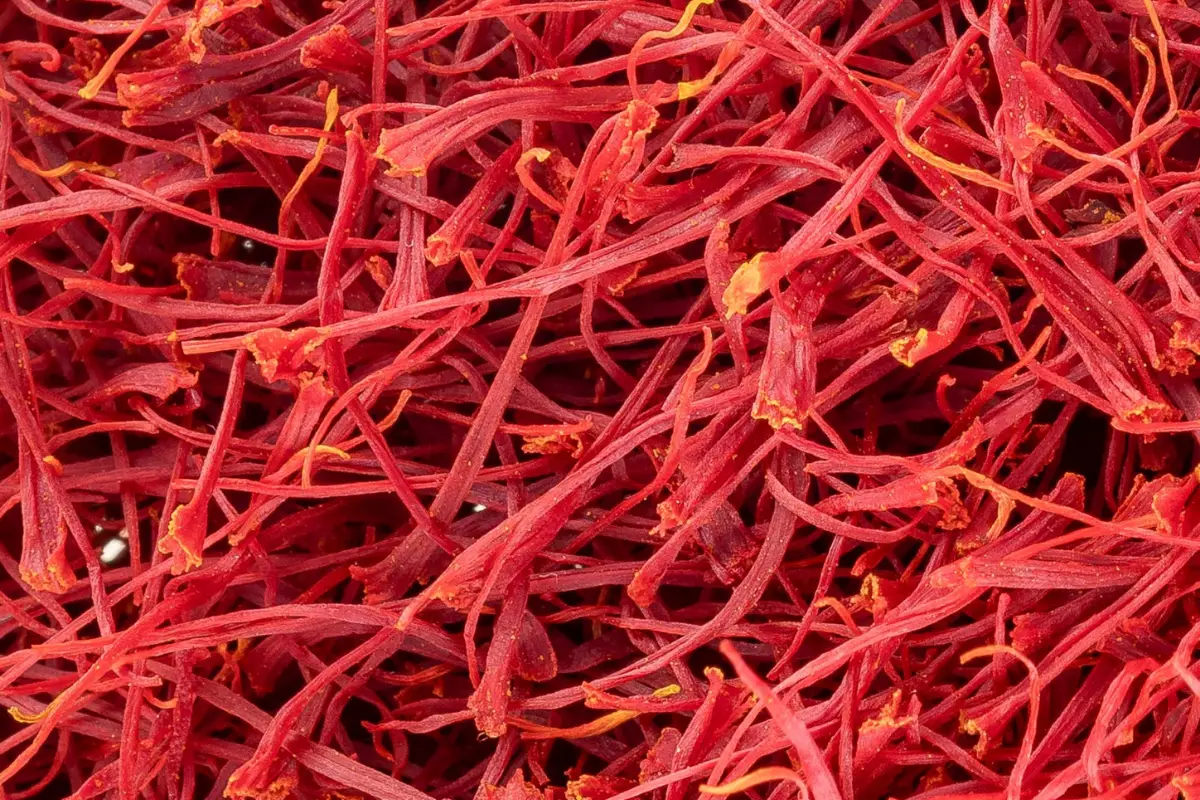
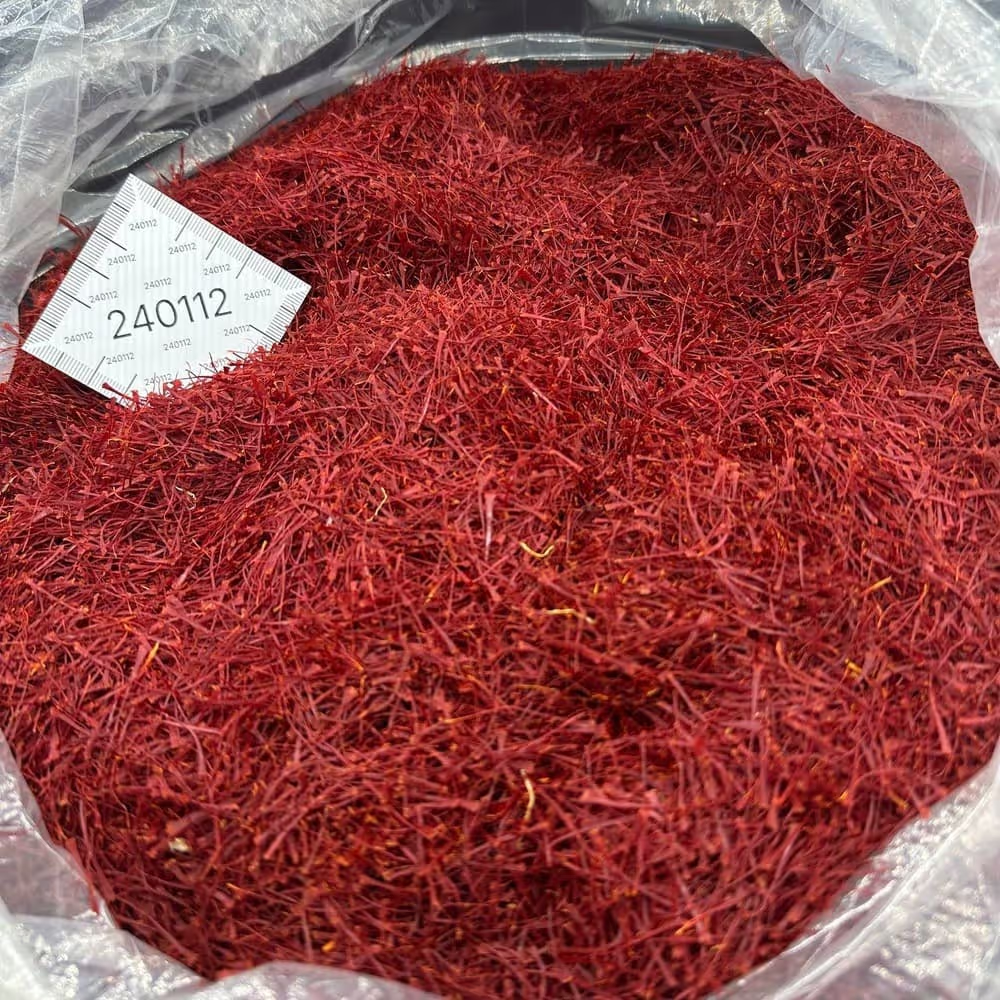
If you are in a hurry and wondering what color saffron is, here is the short answer. The dry threads are a deep, crimson red. But when you add them to warm water, milk, or food, they release a bright, glowing golden yellow colour. The spice itself is red, but the color it gives your food is golden.
When people talk about the world's most expensive spice, they usually focus on the unique flavor and the rich aroma. But the visual appeal is just as important. Often referred to as red gold, this spice holds immense value because of the extreme labor required to harvest it. It takes about 150,000 fragile blossoms just to produce one single kilogram.
Let us look closer at the true saffron colour, the science behind its golden glow, and what it tells you about the quality of the spice you buy.

What is Saffron Made Of? The Saffron Crocus
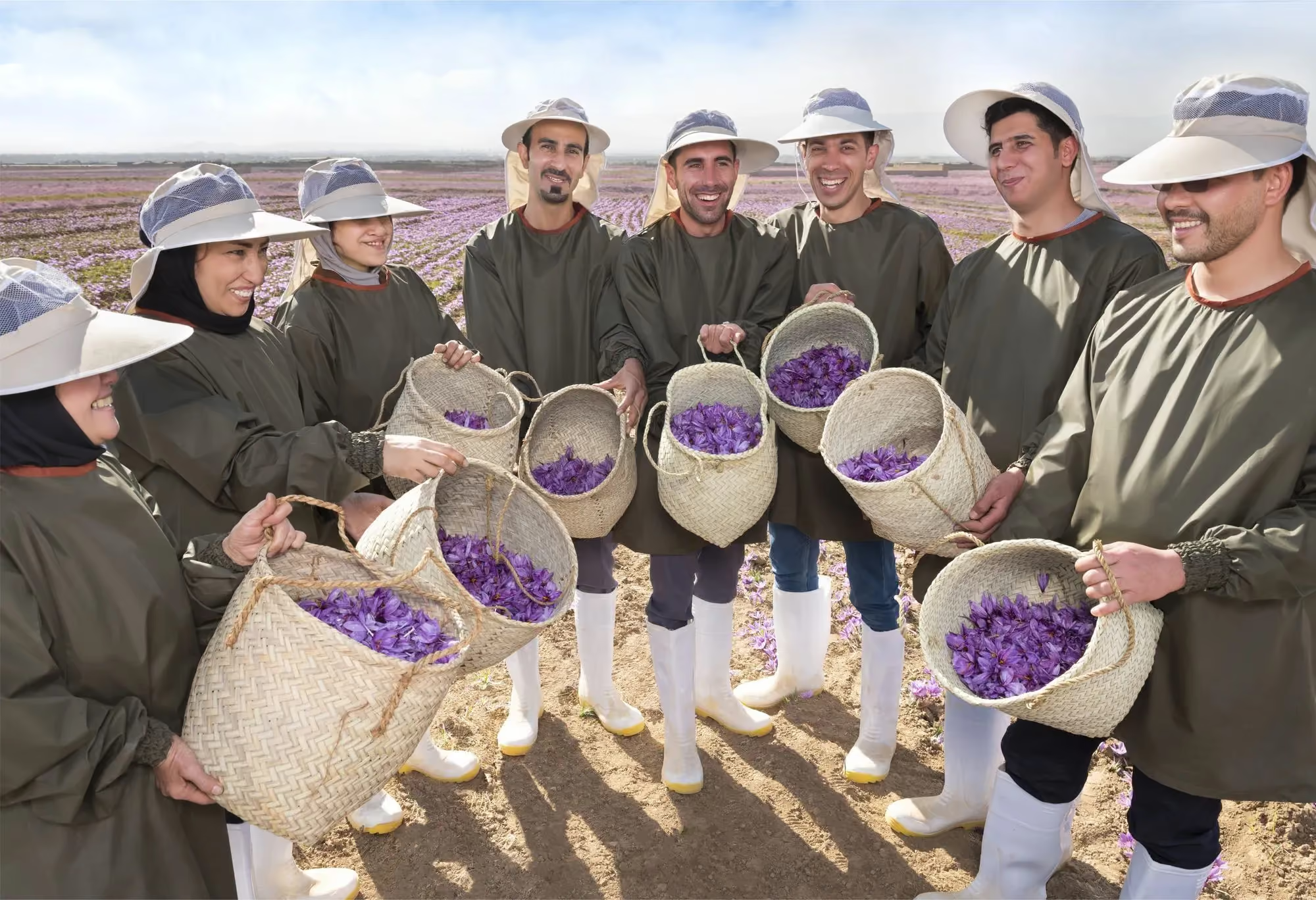
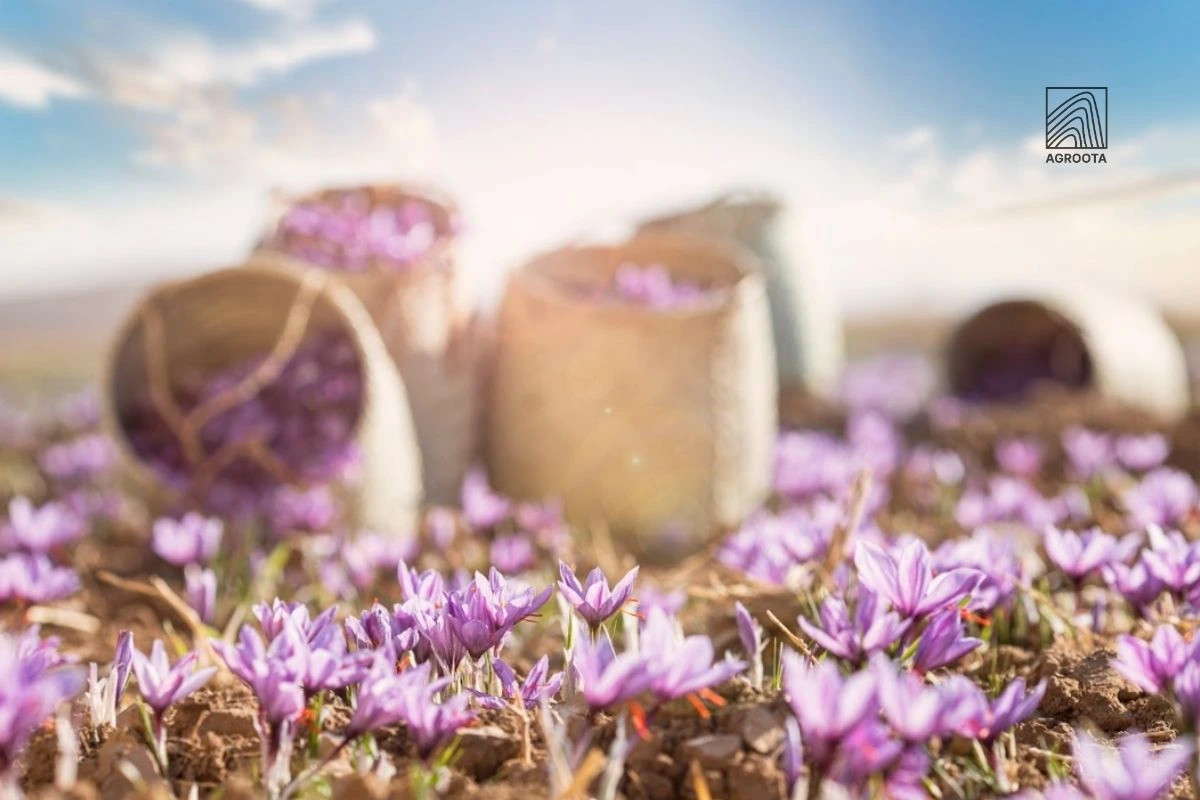
For anyone trying to understand what is saffron, the journey starts right at the source. Before we talk about the spice itself, we have to look at the plant. One of the most common surprises for first time buyers is the color of the actual flower. The saffron crocus is not red or yellow. It is a beautiful, vibrant violet or purple flower.
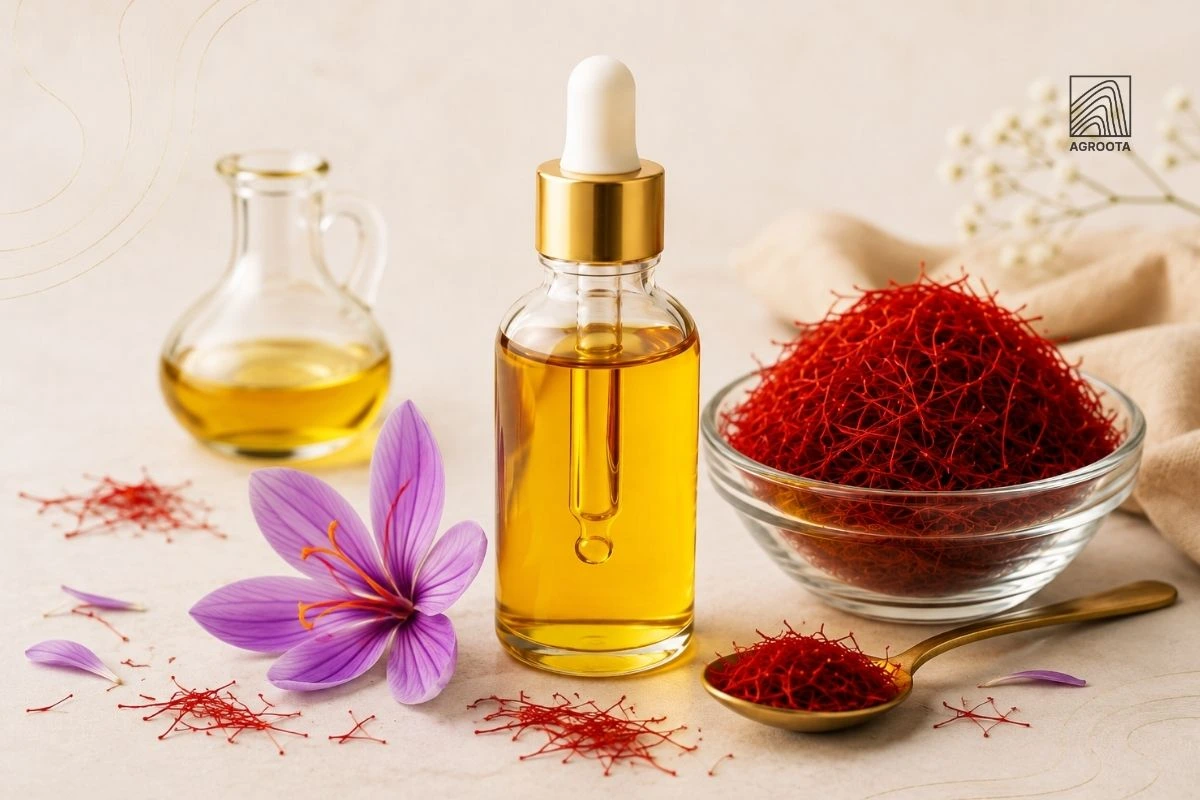
Nestled inside those purple petals are three tiny, vivid crimson red stigmas. These stigmas are carefully picked by hand and dried to become the spice we all know. If you look closely at premium raw threads, the authentic saffron color is a deep, intense crimson red. You will not see a bright artificial red or a dull brick color in a high quality batch.
Check the latest saffron price in the USA!
Why Do Red Threads Turn Food Yellow?
The rich crimson shade comes from a natural water soluble compound called crocin. The higher the crocin levels in the raw threads, the more vivid and dark the red color appears.
Crocin is water soluble, so it moves from the red threads into warm liquid during blooming or cooking. The result is a luminous golden yellow tone that deepens as more spice is used. Creating this iconic golden hue is one of the most popular saffron uses in kitchens around the world.
The best way to draw out the color is to gently crush a few threads and bloom them in warm water, milk or broth before adding the liquid to a recipe. This spreads the colour evenly and helps you get the most out of every single thread.
How the Color Changes in Different Recipes
The spice does not look identical in every recipe. The final shade actually depends on what you mix it with. Here is a quick look at how it behaves in different bases:
- Warm Water or Tea: It creates a clear, bright golden yellow because crocin dissolves cleanly in water.
- Warm Milk or Ice Cream: The color becomes a softer, creamier orange-yellow. The fats in dairy interact with the spice to create a richer shade.
- Rice Dishes: You will see vivid yellow patches or an even pale gold tint. The final look depends entirely on how evenly you mix the blooming liquid into the rice.
For home cooking, start with a small pinch, bloom it first, and add more only if needed. This gives you better control over both the visual appeal and the aroma.

Kesar Color and Zafrani: Are They Different?
Because this spice has traveled across empires for thousands of years, different cultures have special names for its beautiful appearance. In Middle Eastern, Persian, and Arabic cuisines, you will often hear the term Zafrani used to describe the beautiful golden orange shade of rice dishes and syrups.
In India, the exact same shade is celebrated as the kesar color. This warm golden hue holds deep spiritual meaning in many traditions, representing purity, light, and wisdom. Whether you call it Zafrani or Kesar, you are talking about the exact same radiant glow that comes from the authentic red threads. In the world of design, the official hex code for this confident, luxurious shade is #F4C430.
Can the Color Tell You If It Is Real?
You cannot talk about the appearance without mentioning saffron quality grades. Different parts of the flower thread have different colors, and how they are trimmed determines the final grade you buy.
For example, premium grades like Sargol and Negin consist only of the very top parts of the stigma. These grades are entirely crimson red and offer the highest coloring strength. On the other hand, grades like Pushal include a bit of the yellow or orange style at the bottom of the thread. While the yellow part does not have the same cooking power as the red part, seeing a little bit of natural yellow shows that the product is completely natural and has not been dyed.
Does a darker red mean better quality? Not automatically. Deep red threads can indicate a premium cut, but you still need to be careful. Fake dyed threads will lose their red color almost instantly in hot water, turn mushy, and leave the water looking unnaturally bright red. Genuine threads keep their physical red shape and slowly release a yellow gold color.
Want to make an informed purchase? Check the latest saffron price in India today and compare current rates before buying premium-quality saffron.

Where to Buy Quality Saffron in Bulk
When deciding where to Buy Quality Saffron, skip the middlemen and choose lab-tested, farm-direct threads. At Agroota, we source right from the farmers to give you guaranteed color and purity.
Whether you need a few grams for your home or you are looking for pure bulk saffron for your restaurant or wholesale business, we make the buying process safe and easy. We test every single batch in the laboratory to ensure maximum crocin levels and absolute purity. With Agroota, you never have to guess based on appearance alone. You get lab tested proof, rich aroma, and the genuine radiant color in every single order.
Final Thoughts
Understanding the true color helps you make much better choices when shopping for this incredible spice. You want to look for that deep, rich crimson red in the jar and expect a beautiful, luminous golden yellow in your food. Once you know how to spot the real deal, you can enjoy the amazing flavor, aroma, and visual beauty that only the genuine spice can bring to your table.
FAQs About Saffron Color
- Is saffron purple?
The saffron spice itself is not purple. Dry saffron threads are deep crimson red, while the flower they come from, the saffron crocus, has violet-purple petals.
- What color is closest to saffron?
Saffron is closest to a warm golden yellow with a slight orange undertone. It sits between golden yellow and soft orange, rather than looking like a dark mustard or bright red.
- What color is a saffron flower?
A saffron flower is usually violet, lilac or purple. Inside each flower are three vivid red stigmas, which are harvested and dried to produce saffron threads.
- Is saffron more orange or yellow?
Saffron is generally described as golden yellow, especially when infused in water, milk or food. A more concentrated saffron infusion can develop a warmer orange-gold tone.
- What Color Does Real Saffron Turn the Water?
Genuine saffron usually releases a clear golden-yellow colour gradually when steeped in warm water. Water that instantly turns an intense red may indicate added dye, although color alone cannot prove authenticity.
- Why do red saffron threads turn water yellow?
The red threads contain a natural pigment called crocin. When you steep them in warm liquid, this water soluble pigment releases a glowing golden yellow colour.
Looking to Source Saffron in Bulk?
Compare saffron types, review available batches, and source wholesale saffron for your business based on current supply availability.
Need Current Bulk Saffron Pricing?
View indicative wholesale saffron price ranges by type, or learn how Agroota helps businesses source saffron in bulk.

.svg)

.webp)


